Hubris
Overview
Hubris is a sci-fi adventure shooter; made unique by it's climbing and swimming mechanics. Its praised for it's outstanding graphics and animations in VR.
As my first project at Cyborn I got to know the game as I polished and fleshed out existing levels and balanced the enemy NPC's. After that I got to work out a significant number of maps and arenas matching them with new enemy types working out the pacing and amp up the action towards the end of the game.
It was an utter joy being able to put on a VR headset and test out a combat scene you just set up.
Roles and responsibilities:
Game Design
-
Crafted and balanced enemy AI and combat systems.
-
Created weapon progression, currency economy, shield, and health systems.
-
Developed puzzles and interactive mechanics to diversify gameplay.
-
Contributed to pacing and narrative design to support player engagement.
Level Design
-
Built blockouts for 12+ levels, including combat arenas and climbing parkours.
-
Designed and fully implemented a standalone arena mode.
-
Completed the first set dressing pass on multiple levels.
UI/UX Design
-
Rewrote the starting tutorial, leading to higher player retention.
-
Designed ingame menu's and UI.
-
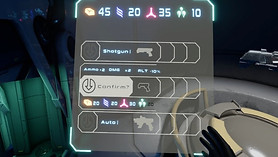
Redesigned weapon selection menu
Quality Assurance (QA)
-
Tested final release builds and patches across PC, Oculus, and PlayStation.
-
Logged, documented, and prioritized bug reports for efficient fixes.
-
Coordinated QA workflows by tracking fixes and managing regression testing.
Community Management
-
Engaged with the player community to gather feedback and identify issues.
-
Managed the Discord server and Steam forums, reporting anomalies to the dev team.
Marketing Support
-
Produced banners, gifs, and in-game footage to support product launches.
-
Co-created release trailers to promote new content and updates.


Genre:
Platform:
Engine:
Duration:
Studio:
Team size:
Awards:
Sci-fi shooter, action-adventure
PC, Steam VR, Oculus, Pico, PSVR
Unreal Engine
2 years
Cyborn
~19
-
WN Unreal Engine best VR Game
-
UploadVR's best desktop game
-
Belgium Game Awards Best XR game


Tools Used:
Unreal Engine, Blender, Adobe premiere, Photoshop, Illustrator
Design Highlights
First steps
My first contribution to Hubris was balancing the combat. When I joined, most of the systems were already in place, but the game lacked the “fun factor.” I was tasked with uncovering and refining that. To get familiar with the project, I began by designing my first combat arenas and using them as a case study.
Through weapon and enemy balancing combined with iterative level building and playtesting, I worked closely with the team to refine the existing systems. I delivered a greybox battle arena to the director, which was praised for its enjoyable gameplay and became the foundation for further development.
From this work, we built a dynamic wave system that allowed us to tweak the type, number, and timing of enemy spawns. I also expanded the enemy roster by adding three variations of the basic trooper (assault, sniper, and default), as well as new drone variants, creating more tactical variety and challenge for players.
Iterations
One of my favorite contributions to Hubris was the creation of the grenade drone. This started as a quick-win idea: we reused the flight mechanics of the existing drone and combined them with a grenade prototype from another enemy. The prototype was up and running in half a day, then refined through tweaks and testing, and the grenade drone was born.
This became my favorite enemy for two reasons. First, it solved a major gameplay problem. In playtests, we noticed players tended to stay static, camping in one spot, which made the experience less dynamic.


The grenade drone forced players to keep moving and anticipate attacks, creating a much more engaging and tactical experience. Second, it required no additional resources. It was a creative reuse of what was already available, proving that simple design decisions can deliver significant impact.


Level Design
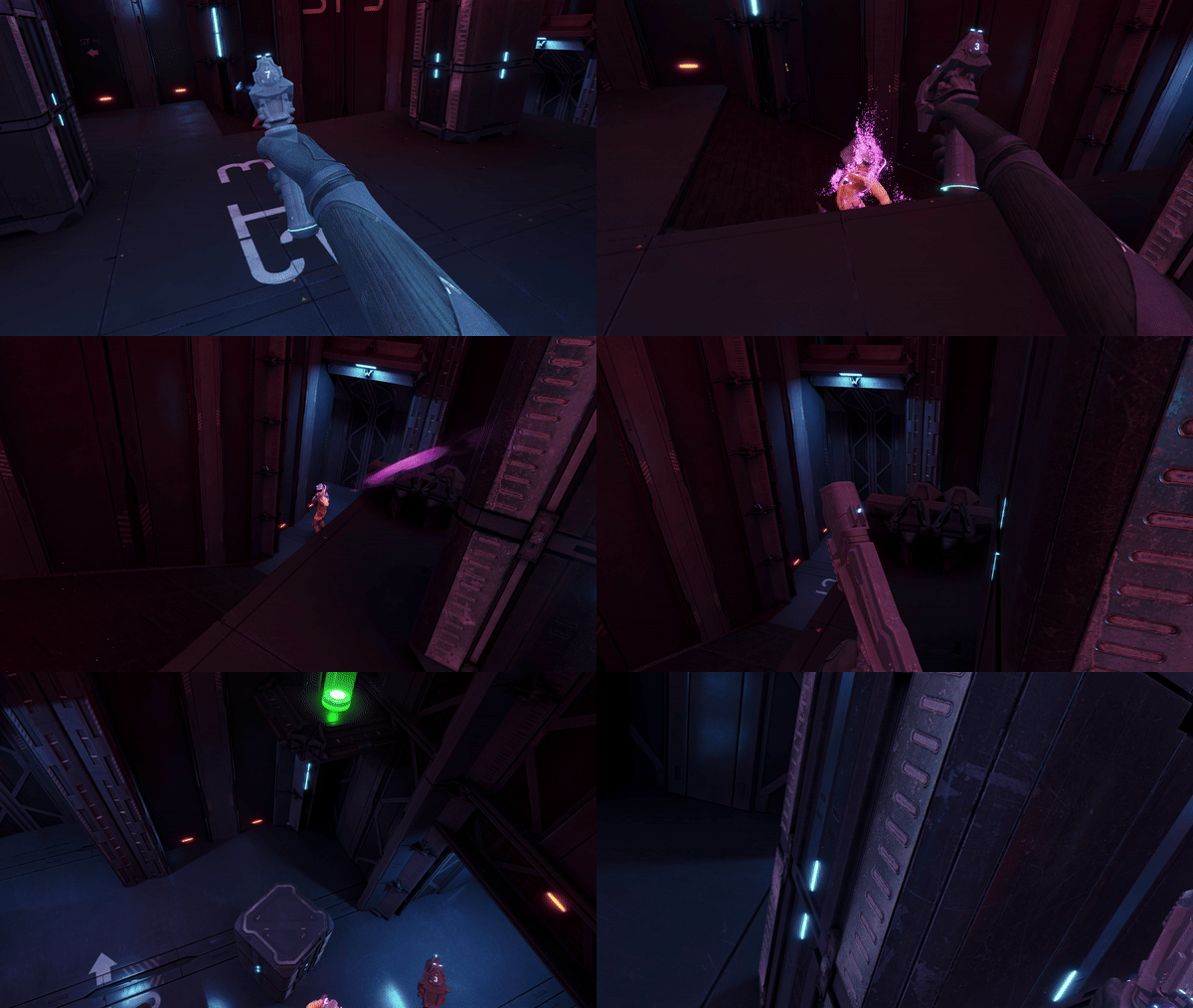
Level design in Hubris was a consistent cycle of greyboxing, testing, presenting to direction, applying feedback, and iterating further. I used standardized prototyping colors and shapes to clearly communicate intent to set dressers, ensuring a smooth handoff to the art department. Throughout the process, I continuously requested and integrated tools for enemy spawning, asset generation, and level flow improvements. Having accessible controls for testing and iteration significantly accelerated development and streamlined production.
My proudest level design achievement was a culmination of every gameplay element coming together. After prototyping, it became clear this level would be a technical challenge, but the director valued it highly, and with support from the technical artist we made it a reality. It became the first level in Hubris to feature long-range firefights, mines, airships, swimming, thickets, and parkour, a true showcase of what the game could offer. The result was reportedly the most appreciated and engaging level among our players, demonstrating the full potential of the project.
Arena Mode
Another opportunity I identified and the last patch for Hubris was Arena Mode. With our existing spawning tools and level assets, I saw potential for a classic wave-based arena inspired by Unreal Tournament. Our players were asking for more content, and nowhere in the game could they jump in and endlessly battle enemies. In under three weeks, I designed, prototyped, greyboxed, and tested the arena. A set dresser added the environment art, and a developer polished the scoreboard. The result was the Hubris Battle Arena, featuring an all-new pickup system and gun powerups.
What I’m most proud of is how smooth the launch was. Thanks to thorough iteration and testing, not a single bug was reported online related to the arena after release. For me, this showcased the power of rapid prototyping, creative reuse, and disciplined iteration in delivering both fun and reliability.

UX/UI Design
As a VR game, one of the most challenging design aspects of Hubris was the UI and interaction design. The way players interacted with the world had to feel natural and seamless. Drawing on my background in UX and industrial product design, I applied real-world ergonomic principles to prototype comfortable ranges of hand movements.
Even after release, we continued iterating based on player feedback. One notable example was the gun reload mechanic. The original interaction proved unintuitive, so we redesigned it into a gesture that was intuitive, usable with one hand, and not tiring. This solution was well received by players, and we complemented it with customization options, allowing players to opt in or out of different reload styles, motion sickness modes, and swim modes to tailor their experience. I am always an advocate to push inclusive controls and customizability when the game allows it.
The in-game UI itself went through multiple prototypes. We arranged interface elements directly in Unreal Engine so they could be tested immediately in VR. This allowed us to quickly validate dimensions, placement, and comfort zones, then tweak and iterate until the UI felt right. This process ensured a balance between ergonomics, immersion, and player comfort.