


Daedalos The Toymaker
Overview
This two-men Unity project was realized by my twin brother and me. His role as a game developer perfectly complemented mine as the artist and designer.
Daedalos the toymaker is a procedurally generated VR puzzle escape game. The player steps in the footsteps of the mythologic Daedalos. A grief-stricken Daedalos is forced to escape a maze of his own creation after the loss of his son Icarus
With each puzzle the player proceeds deeper into the dungeon and mind of Daedalos unravelling its mysteries and finding more clever puzzles.
Game Design
-
Prototyped puzzles and interactive mechanics.
-
Designed the escape room progression system leading players through the dungeon.
-
Co-designed the roguelike elements to ensure a fresh dungeon layout on each playthrough.
-
Wrote the narrative and dialogue of the captured Daedalos, integrating story with gameplay flow.
Level Design
-
Designed dungeon layouts and built a procedural level generator based on WFC tiles.
Production
-
Authored and pitched the Game Design Document and pitch deck, successfully securing project funding.
-
Conducted full market research into VR puzzle games to position the project competitively.
Art
-
Produced all trailer footage and concept art for pitches and project delivery.
-
Modeled and textured procedural assets for the game using Houdini.
Technical Art
-
Created and implemented material shaders for procedural environments.
-
Developed dynamic Substance materials compatible with procedural levels.
-
Designed and implemented VFX to bring atmosphere and life to the dungeon.


Genre:
Platform:
Engine:
Duration:
Team size:
Escape room, Puzzle
PC, itch.io
Unity
6 months
2 man project
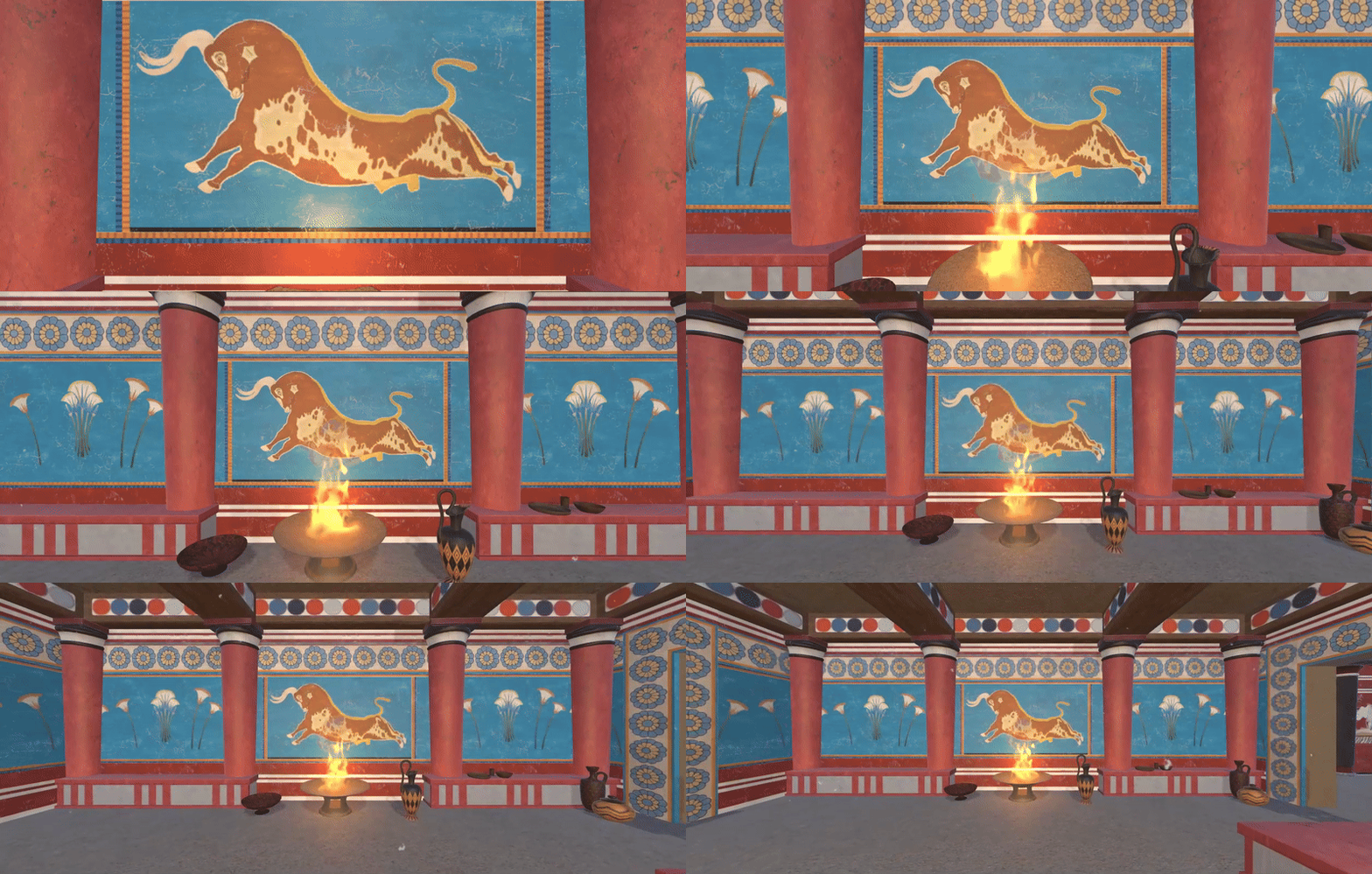
Tools Used:
Unity, Blender, Houdini, Adobe photoshop, Illustrator, Premier, Indesign, Substance, Painter 3D
Design Highlights
Inspiration
At the time, we were working on an escape room concept for a real-world VR space. This inspired us to expand the idea and make the puzzles procedural. The idea was to create a puzzle game that not only was replayable, but had roguelite elements. By using simple tile- and pattern-based systems, puzzles could be reconfigured with each iteration to create new challenges. Through brainstorming, we arrived at the concept of a Daedalos-themed endless labyrinth. Each time the player failed, they had to start over, but the puzzles also changed. This kept players on their toes and ensured the experience stayed engaging, as no puzzle felt repetitive. Additionally, each puzzle solved was replaced with a more difficult variation, gradually increasing the challenge and maintaining player immersion.

Procedural
During pre-production, our focus was on building the dungeon system from the ground up. We used WFC dungeon tiles to generate the layouts and Houdini and Substance to create procedural props. This workflow integrated directly with Unity through the Houdini plugin, enabling us to quickly generate both levels and assets in-engine. The result was a pipeline that supported fast prototyping and rapid iteration, greatly accelerating development.



Puzzle Design
Another part of pre-production was figuring out how puzzles would connect. We brainstormed a variety of puzzle ideas, then selected the most promising ones based on required assets, physical interactions, and implementation complexity. To guide this process, we analyzed existing escape rooms and interviewed their creators.
The core insight was that each room contains multiple puzzles that ultimately contribute to solving a final meta-puzzle, often unlocking a door or key element. From this, we designed a modular puzzle system where each puzzle could be defined as either a starter (providing a key for the next step) or an end puzzle (requiring previous elements to be unlocked). This approach allowed us to procedurally link puzzles together, ensuring variety and scalability.

The system proved both robust and flexible, enabling us to successfully build our vertical slice while demonstrating strong potential for expansion.
Our main focus for the puzzles themselves was to deliver variety and engaging interactions. They ranged from lining up lasers and connecting narrative elements to solving more mathematical pattern-based challenges, ensuring players encountered a diverse mix of experiences throughout the game.
We often reused elements across multiple puzzles to encourage critical thinking and create satisfying “aha” moments. No two puzzles shared the same solution, which kept the experience fresh and unpredictable. For example, the statues we designed served multiple purposes: they referenced different gods for one puzzle, required players to count their legs in another, and concealed a hidden symbol underneath for yet another challenge. This layering of mechanics meant a single element could support multiple solutions, adding depth and replayability to the puzzle design.
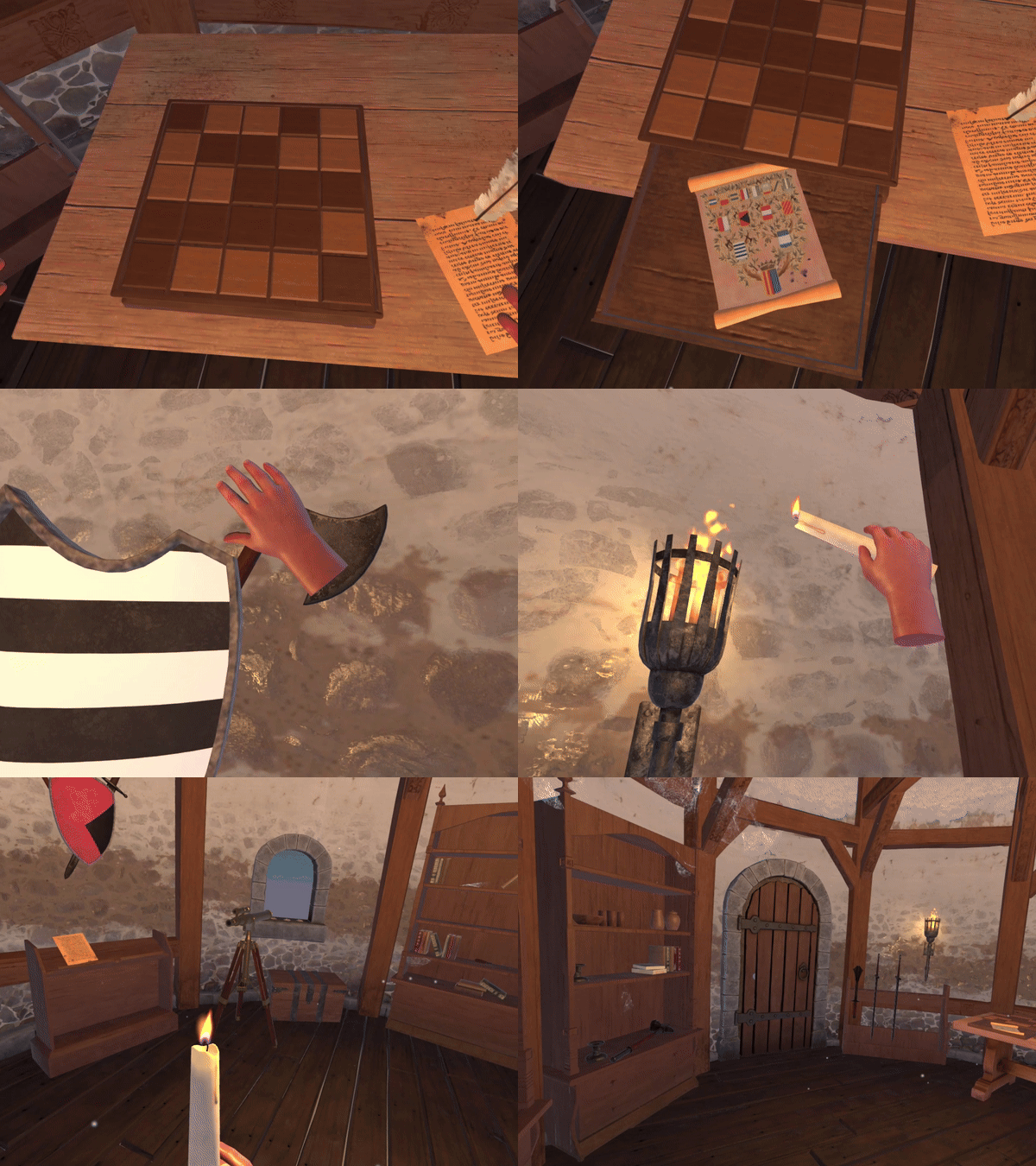
Here is a sneak peak of other ideas we had:


Production
We worked with strict production milestones, which kept development on track and ensured steady progress. Testing a roguelite in VR proved to be a time-consuming challenge, so we built the necessary tools to streamline testing and iteration. One of the biggest hurdles was fine-tuning hand-to-object interactions. Without reliable basics, controls felt fidgety and puzzle manipulation became frustrating. User tests were key in identifying these issues and allowed us to smooth them out.
The narrative was made whole with procedural dialogue from Daedalos, who commented on the player’s actions. This tied the experience together, acting as both a guide who offered hints when players were stuck and as a narrator who shared insights into Greek mythology.
Finally, the experience was polished with a menu hub, VFX, and SFX, completing our vertical slice. Thanks to the procedural design, this vertical slice already offered infinite variations of playthroughs. With more time, and a fully implemented minotaur (currently only suggested through sound design) I believe Daedalos the Toymaker could demonstrate that puzzle games in VR can truly be endlessly replayable.


